
Diagnostics
Car diagnostics and warning-light checks
A warning light means the car has recorded a problem. Working out what caused it takes reading the codes, then testing. Here is the difference between the two appointments and what each costs.
Two appointments
A quick scan or a proper look?
A scan reads what the car has already stored. The hour-long check is the testing that turns a code into a decision.
Best first step
Quick diagnostic scan
For a warning light you want identified before booking anything longer.
When a code is not enough
In-depth investigation
For intermittent faults, wiring and anything that needs testing part by part.
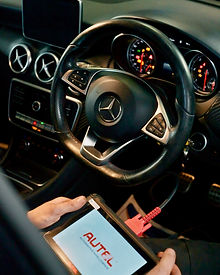
Where we start
Fault-code scan
£45
We read the fault codes stored by the vehicle and explain what they point to. A code is a clue, not proof that a particular part needs replacing.
- Read stored fault codes
- Explain the findings in plain English
- Advise on a sensible next step
A clue, not the answer
When testing is needed
Initial diagnostic assessment, up to one hour
£85
Up to an hour of investigation, including scanning and the relevant tests, with the findings explained and a next step agreed.
- Fault-code scan included in the price
- Up to one hour of testing and investigation
- Findings explained before any further work is quoted
The next step
The scan is not charged twice. The hour-long check includes the scan. If a scan booked at £45 turns into the longer check in the same appointment, what you paid for the scan comes off the £85 total.
The process
How we find the cause
Three stages, in this order. Most of the cost is the testing, not the reading of the codes.
Diagnostics
From a stored code to a decision
- 01
Control units
The car records a code when a reading falls outside what the manufacturer expects.
- 02
Fault codes
A scan reads what has been stored. The code names a circuit or a system, not a part to replace.
- 03
Testing
The technician tests the circuit, the wiring and the component before anything is replaced.
A fault code is a clue, not a diagnosis
Your car records a code when a reading is outside what the manufacturer expects. The same code can come from a failing sensor, damaged wiring, or something the sensor is correctly warning about. Replacing the part named in a code without testing is how people pay twice.
We will not diagnose your car from a description over the phone, and we cannot tell you it is safe to keep driving. If a warning light is red, or the car is behaving unpredictably, stop somewhere safe and call us.
Worth investigating
- A warning light that has come on or is flashing
- The car feels sluggish, judders or idles roughly
- It is hard to start, or the battery keeps going flat
- Smoke, a strong smell, or using more fuel than usual
These are reasons to book, not a diagnosis. Further chargeable investigation is always agreed with you before it starts.
Checks
Inspections and tests
If you want a second opinion rather than a diagnosis, these are fixed-price checks with the findings explained.
Brake inspection
An inspection of the braking system with the findings explained. Inspection only.
£25
Battery and charging-system test
Battery health and basic charging-system checks, with the results explained.
£20
Vehicle health check
Visual checks of tyres, lights, wipers, accessible brakes, fluid levels, visible leaks and battery condition.
£35
A vehicle health check is a visual inspection of the items listed. It is not an MOT, a full service, a pre-purchase inspection or a guarantee against future faults.